Why downtown feels bigger than the map
The first time I tried to “just do downtown,” I stood at 14th Street with a coffee and realized my plan was basically a list of neighborhoods—SoHo, West Village, Chinatown, FiDi—stacked like they were blocks apart. On a map, it’s all below one line; on foot, it’s a series of mini-cities separated by avenues, traffic, and the slow creep of decision fatigue (“Are we really walking to the bridge now?”).
Downtown feels bigger because the pace changes every few minutes. A quiet, tree-lined stretch can flip into a packed corridor where you’re walking at someone else’s speed, and that time adds up. The grid also isn’t uniform once you dip into older streets—routes that look direct can turn into zigzags, and you end up spending energy navigating instead of noticing what you came for.
The fix isn’t more planning; it’s clustering. Think in walkable “loops” (one vibe per half-day) and use the subway or a ferry as a hard reset between them. You’ll see more, backtrack less, and you won’t pay the hidden cost of downtown: burning your best hours on transit-by-foot.
Downtown neighborhoods at a glance, by vibe
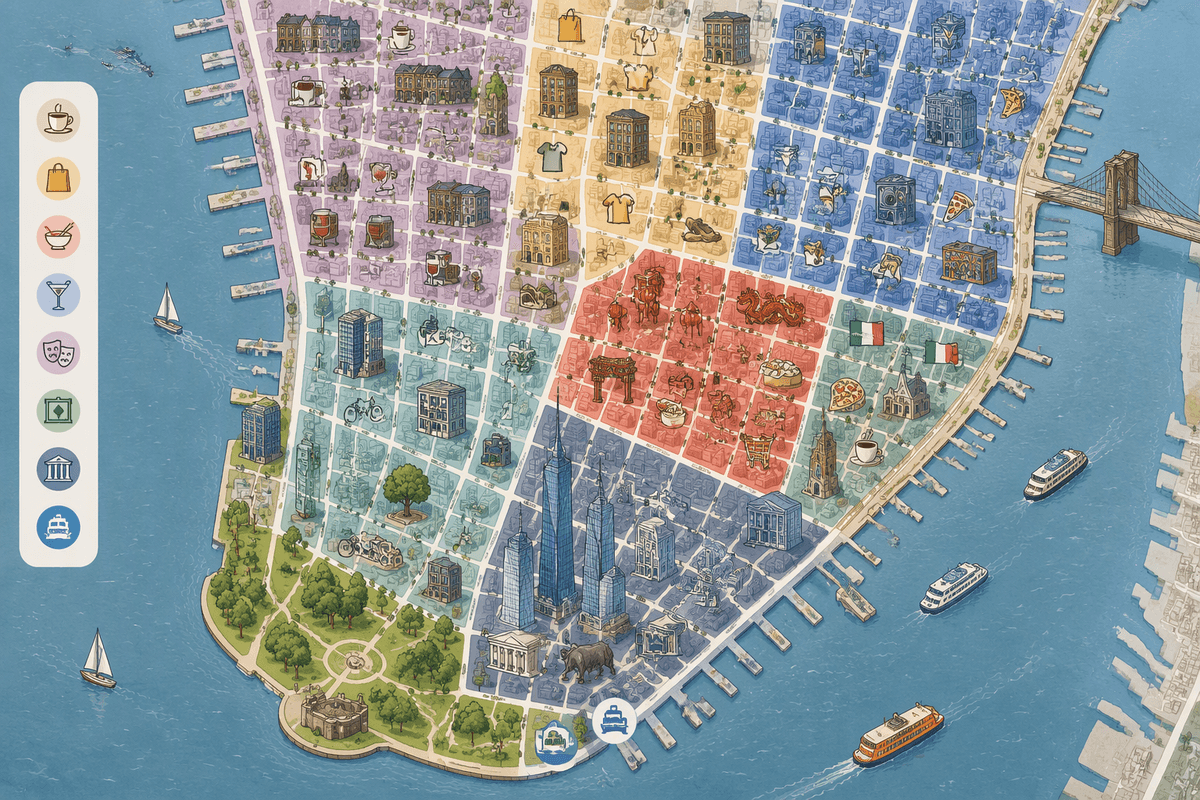
I usually pick a “first stop” based on what I want the first hour to feel like, because downtown mornings are when you can still move freely. If you start with the West Village/Greenwich Village, you get a softer landing—brownstones, smaller streets, café energy—but you also pay for it in slower navigation (more turns, fewer straight shots). SoHo/Nolita is the opposite: easier to walk in broad strokes, but the sidewalks can turn into a shopping parade by late morning, which makes even short distances feel longer.
For food-and-wander density, I treat Chinatown + Little Italy as one cluster and accept that it’s messy: you’ll get the most payoff per block, but it’s also the easiest place to accidentally spend two hours in lines or decision spirals. If you want a cleaner “route,” Lower East Side/East Village is better for a loose bar-to-bite-to-gallery rhythm, though it skews later in the day—show up too early and it can feel like you arrived before the neighborhood turned on.
Financial District + Battery Park is the most efficient for landmarks (and ferry connections), but it’s a weekday neighborhood at heart—great when it’s buzzing, a little hollow when it’s not. Pair it with Tribeca if you want quieter streets without committing to a full slow day.
Top landmarks vs lesser-known stops to prioritize
I learned this the hard way at the 9/11 Memorial: it’s emotionally heavy, logistically heavy, and if you show up at peak midday you’ll also get the “airport security” feeling of slow-moving lines and bag checks. If it’s a must for you, make it the anchor of a Financial District/Battery Park half-day and go early; if it isn’t, don’t force it just because it’s famous—FiDi has better “downtown texture” when you’re not watching the clock.
In the same cluster, One World Observatory is the cleanest skyline hit, but you’re paying for convenience (tickets, queues, elevators) rather than discovery. When time is tighter, I’d rather “spend” those minutes on smaller wins nearby: a quick lap through the Oculus for the architecture (short, free, sometimes chaotic), then into Stone Street for a one-drink pause—fun, but it can feel like a theme set when it’s packed. Battery Park is the reset button if you need air and benches, though the trade is that it’s more scenic than soulful.
Meanwhile, the lesser-known stops that actually solve a downtown day are the connectors: Washington Square Park as a Village pivot (easy people-watching, but noisy), the Tenement Museum if you want one deeply memorable hour (tickets can sell out), and the Staten Island Ferry as a “free boat ride” that’s only worth it if you treat it like transit, not an event.
Eating and drinking: pick your scene, not everything
I usually feel the decision friction hit around lunchtime: you’re hungry, you’ve walked more than you think, and suddenly every “iconic” place looks like a 45-minute line wrapped around a block. Downtown rewards choosing a scene over chasing a checklist. If you want a sit-down meal, commit to one neighborhood that’s good at it (West Village for cozy, LES for louder, FiDi for quick-and-clean weekdays) and accept you’re buying time with money—or spending money to save time.
For Chinatown, my most reliable move is to go earlier than your instincts (late morning) and keep it snack-based: dumplings, bakery buns, something cold to drink, then keep walking. It works because you’re flexible, but it can backfire if your group needs “one real restaurant” to feel settled—decision-making there can eat the same hour you hoped to spend exploring.
At night, I split it cleanly: West Village if you want a slower, conversation-friendly bar where you’ll pay more per drink but actually hear each other; Lower East Side/East Village if you want energy and lower prices, with the risk of waits, louder rooms, and a longer subway ride back to midtown when you’re tired. Pick one lane and it’ll feel like a night out, not a scavenger hunt.
Getting around below 14th: walk, subway, ferry
I’ve watched a “downtown day” fall apart at 6:10 p.m. on a corner in SoHo when everyone realizes they’ve been walking all day and still have to get back to midtown. Below 14th, walking is the default because it’s pleasant and productive—you see the texture between neighborhoods—but it’s also the easiest way to accidentally spend your best energy on transfer miles (crossing east–west is what quietly drains you).
My rule is simple: walk within a cluster, subway between clusters. If you’re going from the West side (West Village/SoHo/Tribeca) to the East side (LES/East Village), don’t “just keep walking” unless you genuinely want the bridge-and-traffic experience; the crosstown hop looks short, but it rarely feels short. The subway is fastest when you treat it as a reset button, not a constant up-and-down: do one decisive ride, then stay above ground for a while.
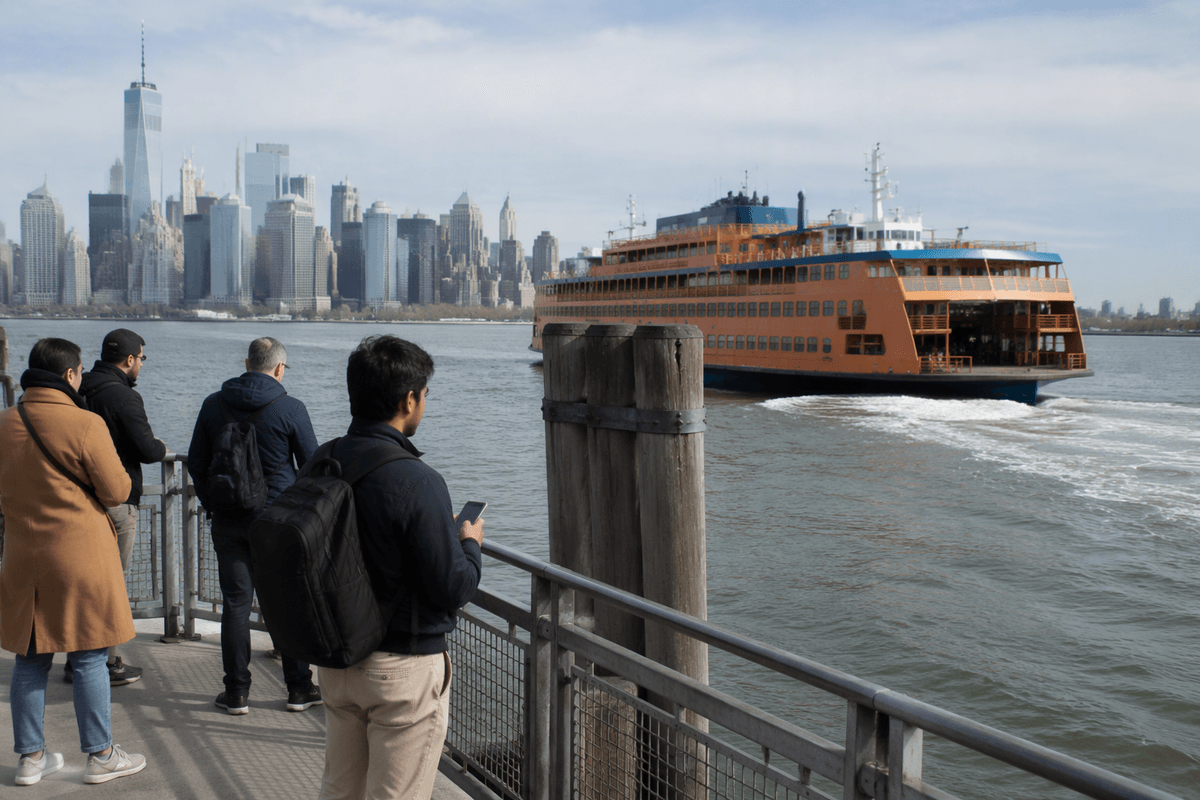
The ferry is the wildcard that can save a day or waste it. It’s great when you’re already in FiDi/Battery Park and want a break from streets (Staten Island Ferry is the obvious free option), but it’s a poor choice if you’re using it as entertainment and then waiting around for schedules. Use boats when they connect two places you’d otherwise backtrack—not as an extra attraction you “squeeze in.”
A simple way to choose your perfect downtown day
Standing at the subway map in midtown, I make one decision before I leave: am I optimizing for “classic sights,” “street texture,” or “food + nightlife”? Pick one as your primary goal, then choose one cluster that matches it and one adjacent “bonus” cluster only if your legs still feel decent by mid-afternoon—otherwise you’ll pay for ambition with zigzagging and a slower, crankier pace.
A simple filter that works: anchor (one timed thing you’d regret missing), drift (90 minutes of unstructured wandering nearby), then reset (one decisive subway or ferry move). If your anchor has lines or security, start there; if your anchor is vibe-based (Village/SoHo/LES), start where mornings are calmer and let crowds push you elsewhere later.
The realistic takeaway: downtown rewards finishing a little early. If you can name what you’re skipping, you’ll enjoy what you keep.