Clarify the recovery goals and likely limitations
The first few days at home can feel oddly reassuring—until a “small” trip to the bathroom leaves your loved one breathing harder than expected, or they need to sit down halfway through brushing their teeth. That’s often the moment families realize their recovery goal isn’t a label like “walk again” or “back to normal.” It’s a string of ordinary actions that have to fit inside a limited daily energy budget, with pain, dizziness, or slowed thinking sometimes showing up without warning.
What helps early is naming a short list of outcomes that matter this week (for example: getting to the toilet safely, eating enough, sleeping without frequent help) and separating them from longer-term hopes. Many people can do a task once, then struggle the second or third time as fatigue builds. If the pattern is “good mornings, rough afternoons,” or “fine with a helper, unsafe alone,” that isn’t failure—it’s a useful limitation to plan around before it turns into a fall, a missed meal, or a worn-down caregiver.
Map daily tasks into high-risk and low-risk zones
It often shows up in the small improvisations: the walker gets left a few steps away “just this once,” the bathroom door won’t open wide enough, the microwave meal is carried one-handed while the other hand grabs the counter. None of these feel dramatic in the moment, but they reveal which parts of the day quietly push balance, attention, and pain tolerance all at once. A task can be “easy” on paper and still be high-risk because it happens when your loved one is groggy, rushed, or already tired.
A useful way to map the day is to separate low-risk tasks (done seated, unhurried, with stable surfaces nearby) from high-risk tasks (done standing, turning, stepping over thresholds, carrying items, or managing water). Toileting at night, showering, and getting meals from kitchen to table often land in the high-risk zone—not because they’re impossible, but because they combine speed, privacy, and slippery or cluttered spaces. The map won’t be consistent every day, and that inconsistency is the point: it shows where support needs to be “default,” not optional.
Design the home setup around effort, not perfection
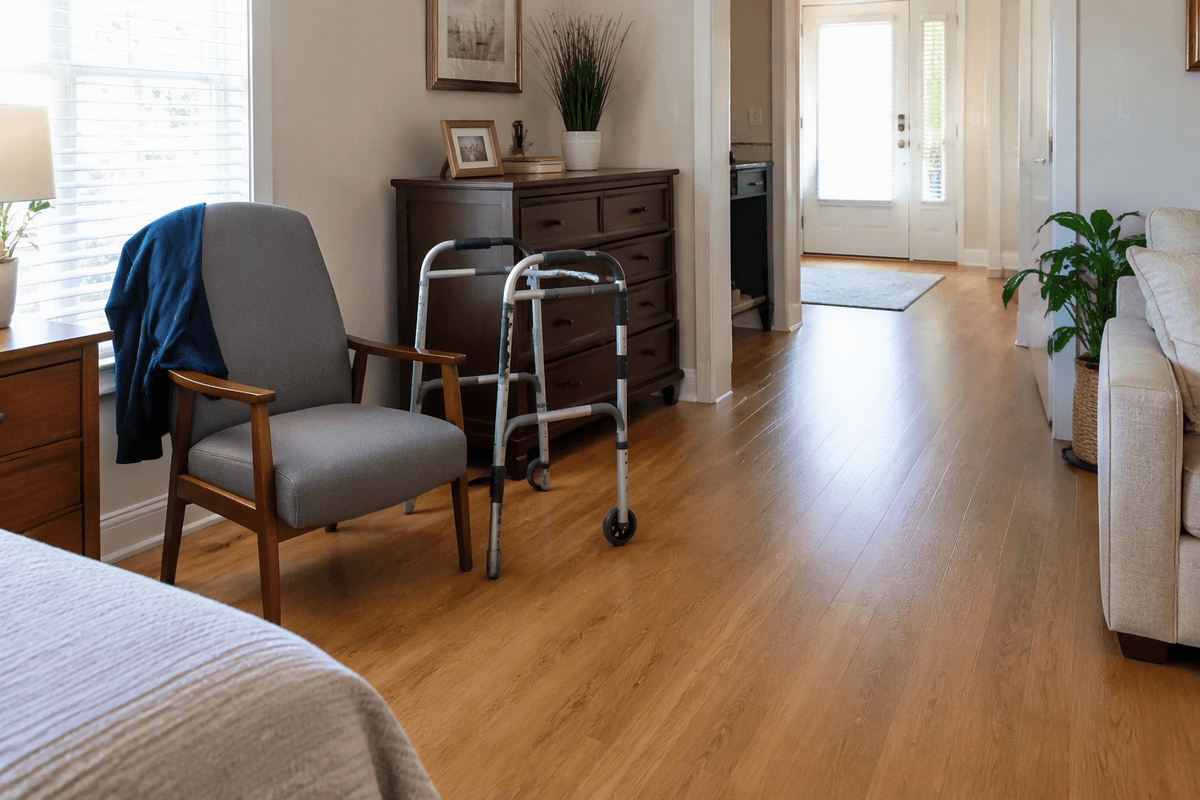
The first time you watch them “set up” for a simple task, you notice the extra steps: turning sideways to squeeze past a chair, parking the walker outside the bathroom because it won’t fit, standing longer than they meant to while searching for toothpaste. It can look like stubbornness, but it’s often just friction—tiny bits of effort that pile up until they’re breathless or shaky. And on days when pain meds or poor sleep blur attention, that same layout can suddenly feel unfamiliar.
A home setup that supports recovery usually isn’t the tidiest—it’s the one that reduces decision-making and repeated standing. The goal is fewer transitions: one stable chair where dressing happens every time, one “landing spot” for the walker, one clear path that stays clear even after laundry day. Some changes will feel inconvenient or temporary, and a few won’t work as expected until you see them try it at 7 a.m. or after a tiring appointment. The win is when movement looks less negotiated and more automatic.
Plan caregiving roles with realistic trade-offs
It’s usually the handoff that goes sideways, not the big tasks. Someone steps out “for just an hour,” and suddenly your loved one needs the toilet, the phone rings, and a meal has to happen while they’re standing and waiting. Later, everyone remembers it differently: they “seemed fine,” they “didn’t want help,” or “it was only a short gap.” Those are normal misunderstandings—especially when the person can do things once, but not reliably on the third try when fatigue, urgency, or embarrassment shows up.
Planning roles works better when you treat help like coverage, not kindness. One person may be best at physical support (steadying, transfers), while another handles the invisible load (med refills, appointments, food setup). The “simple” jobs can be just as draining because they repeat all day. Even with willing family, schedules rarely line up cleanly, and the rough spots—mornings, evenings, overnight bathroom trips—tend to demand the most patience and the least available energy.
Build a medication and symptom tracking system that works
It’s often a small comment that gives it away: “I already took that one,” said with uncertainty, or a new wave of nausea that shows up right when the next dose is due. After a hospital stay, the medication list can look clean on paper but feel messy in real life—especially when pills change, look different from the old ones, or must be taken with food your loved one suddenly can’t tolerate. Pain relief may also blur attention, so the same question gets asked three times, and the third answer is the one that guides what happens.
A tracking system works when it matches how the day actually runs. One visible place to log doses and a few symptoms (pain level, dizziness, bowel movements, sleep, appetite) is usually enough to catch patterns without turning the home into a clinic. Busy evenings and “good days” are when doses are most likely to be delayed or doubled. When you can see the timing, it becomes easier to tell what’s medication-related versus what’s simply a harder recovery day.
Expect emotional and behavioral shifts during slow recovery

Somewhere around the second week, it can feel like their personality is changing. A small request—“let’s sit before you stand again”—gets a sharp response, or they go quiet and refuse the walker they used yesterday. Families often read this as stubbornness or “giving up,” but it may be a normal reaction to weeks of discomfort, interrupted sleep, and the constant effort of being helped. When someone’s body feels unreliable, control becomes the one thing they can still grab, even if it shows up as irritability or risky independence.
A good morning can create false confidence, then a rough afternoon turns into tears, anger, or shutting down. Pain medicine, low appetite, constipation, and simple boredom can all change mood and patience without obvious warning. If the pattern continues—more agitation near evening, more confusion after a dose change, more withdrawal after hard PT days—it’s useful information, not just “bad behavior,” and it affects what they can safely do next.
When helpful choices accidentally create new problems
It can be surprising how the “smart” fixes create their own friction. A new shower chair makes bathing possible, but now the bathroom feels cramped, the walker stays outside the door, and the transfer involves an extra pivot on wet feet. A bedside commode reduces nighttime trips, but it can disrupt sleep, increase odor stress, or tempt someone to skip getting up and moving at all. Even setting everything within reach can backfire if it quietly turns the day into long stretches of sitting, followed by one exhausting push to “do it all” at once.
These are usually good intentions colliding: safety versus privacy, rest versus strength, independence versus speed. The body’s tolerance changes week to week, so yesterday’s workaround can be today’s problem. When you notice new patterns—more dizziness after longer naps, more agitation when help arrives, more pain when activity is delayed—it’s often not a setback so much as feedback that the routine needs one small adjustment, not a full reset.


![10 Best Money Apps for Teens Under 18 [Invest, Pay + More]](static/image/2026/09/01/3f428ab8-8307-404d-a595-f709507802d9.png)