Expect slow roads, huge views—Must flexible
The first real decision happens before you even leave the Milan rental lot: do you want the fastest line on the GPS, or do you want the road that keeps pulling you to the shoulder for “just one more” photo? In Northern Italy, the scenic choice routinely adds 30–60 minutes you can’t bargain back later—because it’s not just distance, it’s tight villages, cyclists, and hairpins that slow you down even when traffic is light.
If you’re aiming for quieter towns and big valley scenery, build your days around one anchor drive and one anchor walk, then stop pretending you’ll “also swing by” a famous lake or a headline viewpoint. The routes that feel magical are often the ones with fewer services: fewer gas stations, fewer quick lunches, and parking that turns into a small negotiation with yourself (pay lot vs street vs keep circling). That’s why pacing matters more than packing in sights.
Two guardrails will save you: treat ZTLs as a hard boundary (if your lodging is inside one, confirm written access instructions in advance), and decide early when you’ll pay tolls. Tolls buy predictability when you’re late; backroads buy atmosphere when you’re not. The trick is staying flexible enough to switch without feeling like you “failed” the plan.
Day 1 Lake Orta—Must SacroMonte; Opt Mottarone; Skip Maggiore.
We pointed the car northwest from Milan with that familiar first-day doubt: take the autostrada to “get there,” or meander and risk arriving after the best light? For Lake Orta, I’d bias efficient at the start—clear the city and its ring-road friction—then slow down once you’re near Orta San Giulio, where the lanes tighten and parking becomes the day’s first micro-challenge. If you’re staying overnight, choose a hotel with explicit parking instructions; Orta’s ZTL boundaries are easy to blunder into when you’re following a map that doesn’t care about camera fines.
The must-do here is Sacro Monte di Orta. It’s not a long hike, but it rewards a slower pace: shady paths, intermittent viewpoints, and a sense of “above the lake” without needing a full mountain day. It also works well when your legs are still waking up from travel. Go earlier if you can—later in the afternoon, the walk can feel compressed by day-trippers, and the small lots fill in a way that turns peaceful into slightly fussy.
If the sky is clear and you want a bigger panorama, Mottarone is the optional add-on—but treat it as a time-and-energy purchase. The road up is straightforward yet slower than it looks, and cloud can erase the payoff. On a 7–10 day loop, I’d skip Lake Maggiore today: it’s close on the map, but the shoreline driving and parking effort dilute what makes Orta feel quietly special.
Day 2 Val Grande—Must Pogallo; Opt Cannobina; Skip motorway.
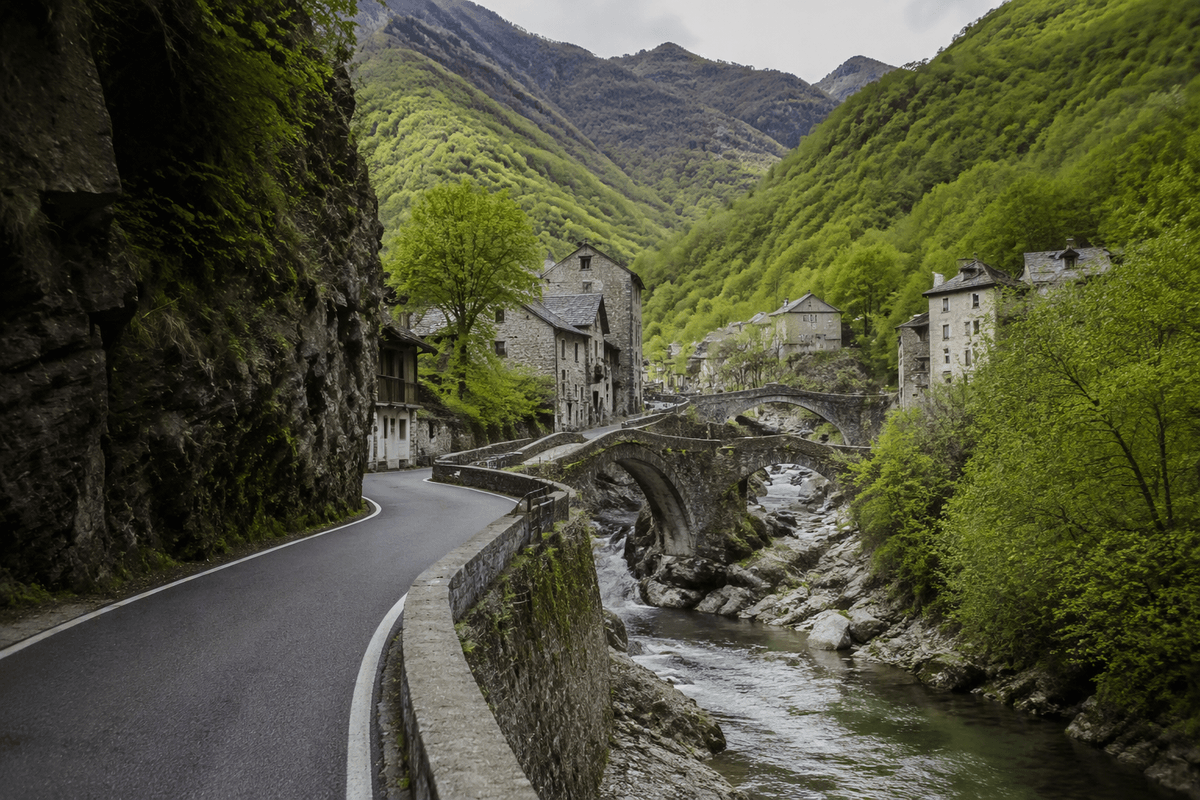
By the second morning, the temptation is to “make time” by jumping straight onto the motorway—but Val Grande punishes that mindset. The access roads are slower, yes, and they feel a little under-serviced (fewer obvious cafés, fewer pull-offs), but that’s exactly why the valley still feels like an actual place rather than a corridor between famous stops. We aimed for the Pogallo side because it forces you to commit: once you’re in, you’re not casually tacking on a lake promenade later without paying for it in daylight and patience.
Pogallo is the must because it delivers the Val Grande experience with a clear, contained effort: a walk that feels remote without requiring full alpine gear or a heroic fitness day. The constraint is logistics, not difficulty—parking is limited, and if you arrive late you’ll spend your best hours negotiating a spot or backtracking to something farther away. Start earlier than you think you need to, and keep lunch simple; lingering over a long sit-down meal is the easiest way to turn a satisfying half-day into a rushed one.
If you want a drive that stays scenic without becoming stressful, the optional add-on is Val Cannobina—beautiful, quieter, and slower in that “one wrong turn becomes ten minutes” way. I’d still skip the motorway here unless weather is turning or you’re behind schedule: it saves minutes, but it also strips out the texture that makes Day 2 feel different from Day 1.
Day 3 Valtellina—Must ValdiMello; Opt Bernina; Skip ski-buzz.
The morning we turned east toward Valtellina, our GPS kept offering “faster” options that all looked the same: broad valley floor, steady speed, and a creeping sense that you’re just commuting. Val di Mello is the antidote, but you have to choose it on purpose because the last stretch narrows and parking can become the whole story if you arrive at the wrong time. We treated it like an appointment—arrive earlier, walk first, café later—and the day immediately felt quieter than the big-name alpine bases.
Val di Mello is the must because it gives you a high-alpine mood without the heavy lift: a wide, photogenic valley, a walk you can scale up or down depending on your legs, and enough “wow” to justify the detour. What doesn’t work as well is trying to make it a quick stop between towns; the access road and the foot-time add up, and rushing it turns serene into slightly pointless. If you want a mid-range base, look for somewhere on the edge of the valley rather than in a ski hub—parking is easier, dinners are calmer, and you won’t pay resort prices for a night you’re mostly using to reset.
If you’re craving a bigger driving flex, the Bernina option is spectacular—but it’s also a commitment of daylight, weather, and focus (especially if clouds roll in and the views flatten). I’d skip the ski-buzz towns today even if they’re “right there”: traffic patterns, pedestrian zones, and evening crowds can eat the exact calm you came to Valtellina for.
Day 4 Brenta Dolomites—Must Tovel; Opt MadonnaCampiglio; Skip Garda.
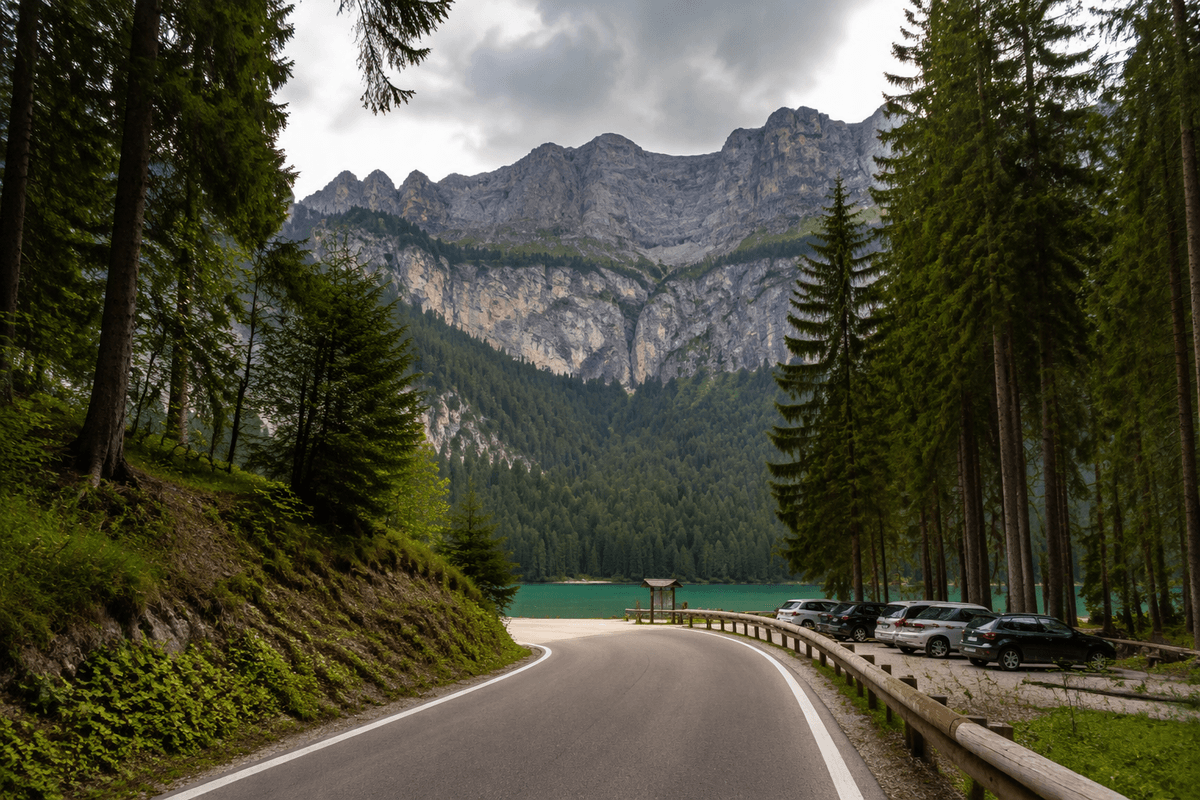
We hit the Brenta approach with that familiar mountain-route question: do you push straight to a famous base like Madonna di Campiglio to “feel in the Dolomites,” or do you spend your limited daylight on a quieter road that actually lets you stop? For this day, Lago di Tovel is the move—because it’s dramatic without being performative, and it doesn’t force you into resort logistics (garage hunting, pedestrian zones, peak-hour congestion) the moment you arrive.
Tovel works best if you treat it as a half-day loop rather than a drive-by photo. The road in is scenic but not fast, and the parking situation is the constraint: arrive late and you’ll either pay with circling or end up parking farther out and turning “quick lake walk” into a longer haul. If you’re choosing between a longer hike elsewhere and Tovel, Tovel wins on reliability—when weather is mixed, the lake and forest still feel like a complete experience, while higher viewpoints can disappear into cloud.
Madonna di Campiglio is a reasonable optional add-on for dinner or a stroll, but go in knowing it can feel like a ski town out of season: polished, busy, and not especially intimate for a mid-range couple trying to keep the trip calm. I’d skip Lake Garda entirely today even if it’s calling your name on the map—dropping to the lake is a time sink, and the crowd/parking friction is exactly what makes the Brenta day feel less special if you dilute it.
Wrap: savor one valley—Must linger
On the last morning, we had that familiar rental-car itch to “use the hours” and chase one more headline stop, but it’s the easiest way to end up stressed, slightly lost, and watching the clock instead of the mountains. What worked better was choosing one valley to linger in—an unhurried coffee, a short repeat walk, a second look at the same view in different light—because it costs almost nothing and pays back in how the whole trip feels when you look back on it.
If you’re deciding where to linger, pick the place where logistics felt simplest: the valley where parking didn’t turn into a scavenger hunt, where you weren’t constantly checking for ZTL signs, and where you could improvise a stop without “wasting” an hour. That’s usually not the biggest lake or the most famous Dolomite base; it’s the spot where you had enough time to be curious.
One practical cue: if you have a flight out of Milan, buy predictability on the final drive (tolls, earlier departure, fewer detours). Ending with a calm margin beats ending with one more view and a tight arrival.