You just got $100k—now what feels risky
The money lands and, for a day or two, it feels like relief. Then it turns into a moving target. Leaving $100k in cash feels “safe” until you notice what the interest actually is after taxes, and you start doing the quiet math on lost upside. Putting it into the market feels “smart” until you picture a 20% drop right after you buy, and you realize you might need part of it in 18 months. Paying off debt sounds like a guaranteed win—unless that wipes out your liquidity and the next surprise expense goes on a card again. The risk isn’t one option; it’s picking a plan that ignores timing, taxes, and the way you’ll react under stress.
The ‘best’ plan breaks when your timeline shows up

Once a “correct” answer starts forming—max the market, optimize taxes, ignore the noise—the calendar steps in. A house down payment in 12–24 months turns volatility into a real risk, not a theoretical one. A job change or bonus structure can shift your tax bracket and make last year’s move look sloppy. Even a planned $100k lump sum starts behaving like three different piles when one part needs to stay liquid, another can be locked up, and a third can take equity risk.
The plans that blow up usually aren’t too aggressive or too conservative; they’re too single‑purpose. The friction shows up fast: early‑withdrawal rules, capital gains you didn’t expect, or the feeling of being “stuck” when an expense hits. Timeline is the stress test, and it forces trade-offs into the open.
Before investing: define three non‑negotiables fast
You can’t fix uncertainty, but you can stop it from steering. Before you pick accounts or tickers, force three “can’t break” rules onto the table—quickly, while the money still feels like one pile. The first is a liquidity floor: an amount that stays accessible in days, not weeks, even if it earns less. If that number is wrong, every other choice becomes reactive the first time a $12k repair or a gap between jobs shows up.
The second is a max drawdown you’ll actually tolerate on the investable portion. Not the optimistic version—what you could sit through without selling at the bottom. The third is a tax/lock-up boundary: how much you’re willing to put behind contribution limits, penalties, or long settlement timelines. With those three set, $100k usually stops being “one decision” and turns into two or three buckets that won’t sabotage each other.
Option 1: lock in tax breaks via retirement accounts
The first place the $100k starts to feel less overwhelming is when part of it gets a label you can’t casually undo. Retirement accounts do that, and the tax angle is real—but the constraint is real too: annual limits and access rules mean you can’t simply “move the whole pile” in one clean sweep. In practice, this option is less about chasing the perfect fund lineup and more about capturing scarce space each year before it’s gone.
If you have earned income, prioritizing a 401(k) (especially to the match) and then an IRA tends to be the cleanest tax win, because deferrals reduce current taxable income and Roth contributions can firewall future gains. The friction shows up when the timeline is short: early withdrawals can trigger taxes and penalties, and Roth conversion ladders take years to mature. This bucket works best when you’re confident that money won’t be needed on a 12–24 month horizon.
One practical tell: if you’re hesitating because you “might” need it, don’t force the whole decision here. Treat retirement space as the portion you’re willing to make boring and hard to touch, then let the rest compete on flexibility.
Option 2: build a taxable index portfolio for flexibility
The moment you decide not to trap the whole $100k behind contribution limits, the brokerage account starts to look like the “adult” compromise: money that can grow, but can also be accessed without penalties if life changes. The flexibility is real, yet it comes with a quieter cost—taxes show up every year, and the market doesn’t care that you planned to be patient. This option works best when part of your timeline is fuzzy, but you still want a long-run equity engine running in the background.
In real use, the constraint is behavioral and tax-driven. A plain index mix (often a total U.S. stock fund plus a total international fund, then bonds only if your drawdown limit requires it) keeps turnover and surprise distributions low. You’re still signing up for capital gains when you sell, and dividends you can’t defer. If you might spend from this within a couple years, you end up holding some of it in a cash-like sweep or short Treasuries anyway—otherwise one bad quarter forces a sale at the wrong time.
Option 3: treat debt payoff as a guaranteed return
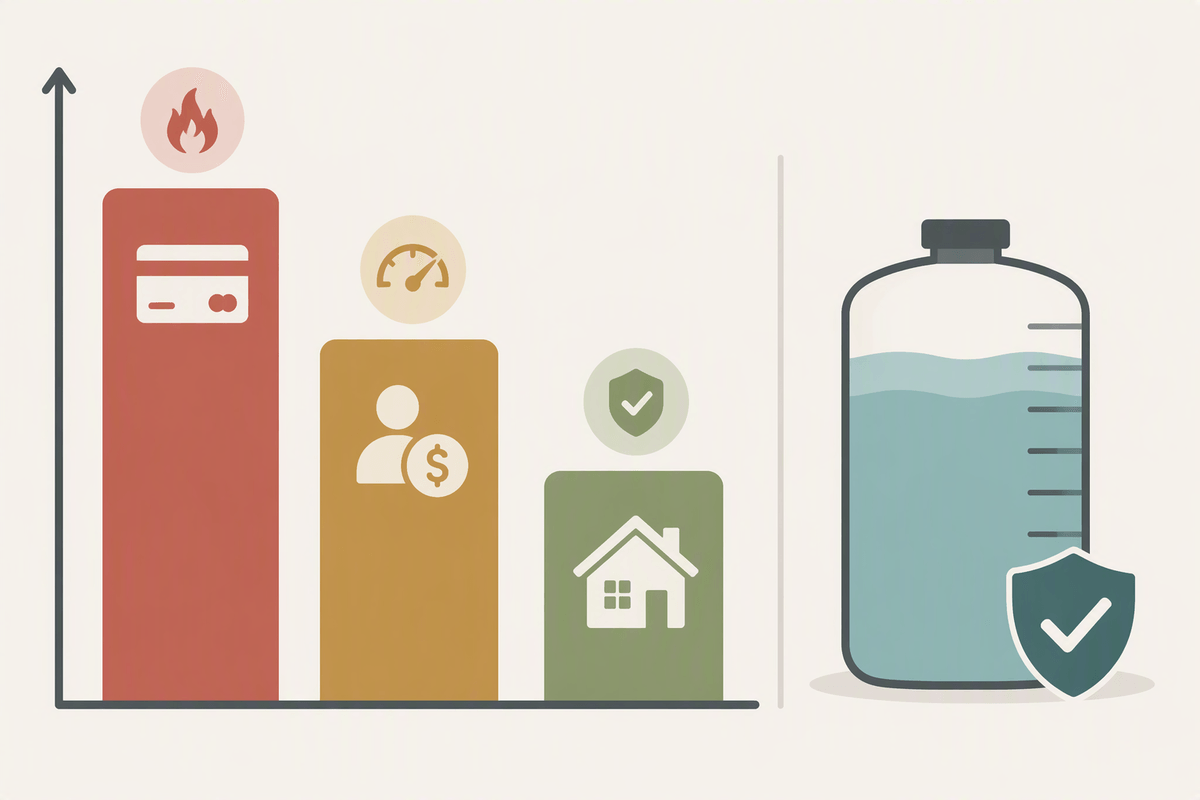
The taxable portfolio feels flexible until a debt balance is sitting next to it, compounding in the wrong direction. This is where payoff starts behaving like an investment decision: the interest rate is the “return,” and it’s one you don’t pay taxes on. A 7% card or personal loan is a clean, high-confidence win; a 3% fixed mortgage is less obvious, especially if paying it down would shrink your cash buffer and force you back to borrowing when something breaks.
What tends to work in practice is ranking debts by rate and by damage. Anything variable-rate, anything that can snowball into fees, and anything that keeps you from maxing an employer match usually goes first. The constraint is liquidity: once you send the money, you can’t sell a “slice” of it in two days the way you can with a brokerage ETF. If paying off a $25k balance would leave you under your liquidity floor, it’s not a guaranteed return anymore—it’s a setup for the next card swipe.
There’s also a timing edge: eliminating a required payment can lower monthly stress and widen the runway for market risk elsewhere. If the debt payoff meaningfully increases your free cash flow, it can turn your future contributions into the growth engine, while the remaining $100k pieces stay flexible on purpose.
Option 4: real estate exposure without overcommitting
After debt is quieter and the brokerage bucket is doing its job, real estate usually sneaks back in as “something tangible.” The catch is commitment: a rental or a bigger down payment can turn one decision into a second job, and transaction costs make a quick exit expensive. If the timeline is uncertain, that lock-up matters as much as the expected return—especially when repairs, vacancies, or a rate reset show up at the same time the market is down.
A lighter way to get exposure is to keep the $100k liquid and buy the real estate “slice” in public markets: a low-cost REIT index fund, or even a small allocation inside the same taxable portfolio. It won’t behave like owning a specific property, but it also won’t demand surprise capital calls or months of selling time. The constraint moves to taxes and fees—REIT payouts are often less tax-friendly—so this tends to work best as a capped allocation, not the center of the plan.
Put it together: a simple mix you can live with
After you’ve split the money into “can’t touch,” “might need,” and “can wait,” the mix usually writes itself. A workable default is: keep 3–9 months of expenses truly liquid; use the next chunk to wipe out any high‑rate, high‑stress debt; then aim new annual contributions into retirement space as it becomes available, instead of forcing the entire $100k through limits in one year.
What’s left can sit in a taxable index portfolio sized to your drawdown tolerance, with a small, capped real‑estate slice only if you won’t chase it when headlines get loud. The constraint you’re optimizing for isn’t peak return—it’s avoiding a plan that triggers a bad sale, a tax surprise, or a cash crunch at the same time.