Before you start: Philly in one day
The first choice hits fast: do you want Philly to feel like “founding history” or “food-and-neighborhoods” first? With only 24 hours, trying to cram in both at full intensity is how you end up tired, hungry, and zigzagging across Center City.
This plan works best if you treat Philadelphia like a set of walkable zones linked by short hops—Old City in the morning, Reading Terminal by late morning, then either the Parkway museums or a slower streetscape afternoon. You can do both, but it usually means rushing galleries and skipping the sit-down meal that makes the day feel grounded.
One realism check: Philly is flatter than it looks on maps, yet the blocks are long and time slips. Build in 15–20 minute buffers for lines (especially at peak lunch), and keep one “weather swap” ready—museum if it’s raining, river walk if it’s not.
Morning: Old City history walk
At 8:30-ish in Old City, the first friction point is deciding whether you’re “seeing” history or actually going inside it. Independence Hall tours are the classic anchor, but the fixed times and security line can quietly eat your whole morning if you haven’t reserved ahead. If you did book, build your walk around that slot; if you didn’t, don’t hover hoping to luck into a perfect time—pivot to the outdoor-heavy loop and keep moving.
I like starting at Independence Mall while it’s still calm, then walking a tight rectangle: Liberty Bell (quick, but often a longer line than people expect), then over to Elfreth’s Alley for a two-minute “this is the oldest residential street” hit, and down toward the river. It’s all close, but the temptation is to add “just one more” historic stop and suddenly you’re late for food. If it’s hot or you’re already behind schedule, skip interiors and let the streets do the work—Old City reads best on foot.
If you’re choosing between the Museum of the American Revolution and “more walking,” this is the moment: the museum is excellent but it’s a time commitment, and it can crowd out Reading Terminal later. On a one-day clock, I’d only go in if you’re genuinely museum-motivated or the weather is miserable; otherwise, bank the energy for lunch and the afternoon.
Late morning: Reading Terminal + nearby sights
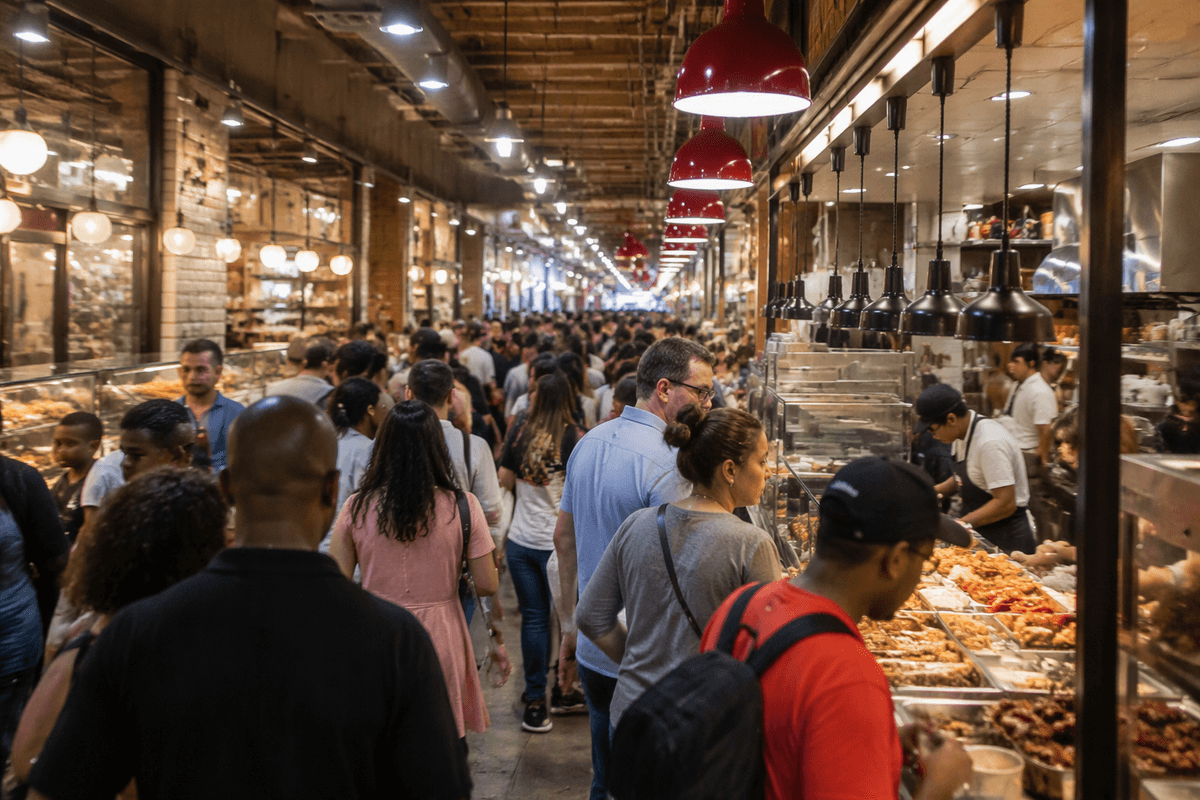
I hit Reading Terminal Market a little before noon and immediately regretted not setting a rule for myself: one savory, one sweet, then stop. If you try to “sample everything,” you’ll spend more time orbiting crowded aisles than actually eating, and you’ll walk into the afternoon feeling oddly unsatisfied. The market is best as a targeted refuel—fast, loud, and efficient—rather than a culinary scavenger hunt.
For a first-timer on a mid-range budget, this is where you choose between a proper sit-down lunch (comfort, bathrooms, a reset) and market grazing (speed, variety, but nowhere to land). If lines are brutal, don’t wait on the most famous counter just because you’ve heard the name; pick the shortest line that still looks busy with locals and keep your timing intact. Plan 60–90 minutes total inside, including the “wandering tax,” and accept that peak lunch crowds can add 15–20 minutes even if you already know what you want.
When you’re done, nearby sights work best as a quick loop, not a new mission: walk past City Hall and the LOVE sign for the photo, then decide whether you’ve got energy for more steps. It’s tempting to detour into shops or push all the way to Rittenhouse, but that’s where backtracking sneaks in—better to angle toward the Parkway next while you’re already west-facing.
Afternoon: Parkway museums or streetscapes
Standing at City Hall with the afternoon stretching out, the choice gets concrete: do you want to spend your best energy inside a world-class museum, or keep Philly as a moving, outside city? The Parkway is the cleanest pivot because it’s a straight shot up Broad/Ben Franklin Parkway—but it’s also where your pace can quietly collapse if you “just pop in” somewhere without deciding how long you’ll stay.
If you’re museum-inclined, commit to one: the Philadelphia Museum of Art is the iconic pick (yes, the steps are fun, but they also add time and leg burn you’ll feel by dinner). The Barnes is smaller and more contained—easier to do in a tight 90 minutes without spiraling, but you’ll need timed tickets and you can’t freestyle as much. Either way, build a hard stop time; otherwise, you’ll emerge at 5:30 p.m. hungry and far from your evening neighborhood.
If the weather’s decent or you’re already “museumed out,” take the streetscape version: walk the Parkway’s centerline, cut through Logan Square, and use the Schuylkill River Trail as your reset. It’s calmer than the historic core, but it’s not “close” to everything—once you drift riverward, getting to dinner is a rideshare-or-transit decision, not a casual wander.
Evening: dinner neighborhood + skyline finish
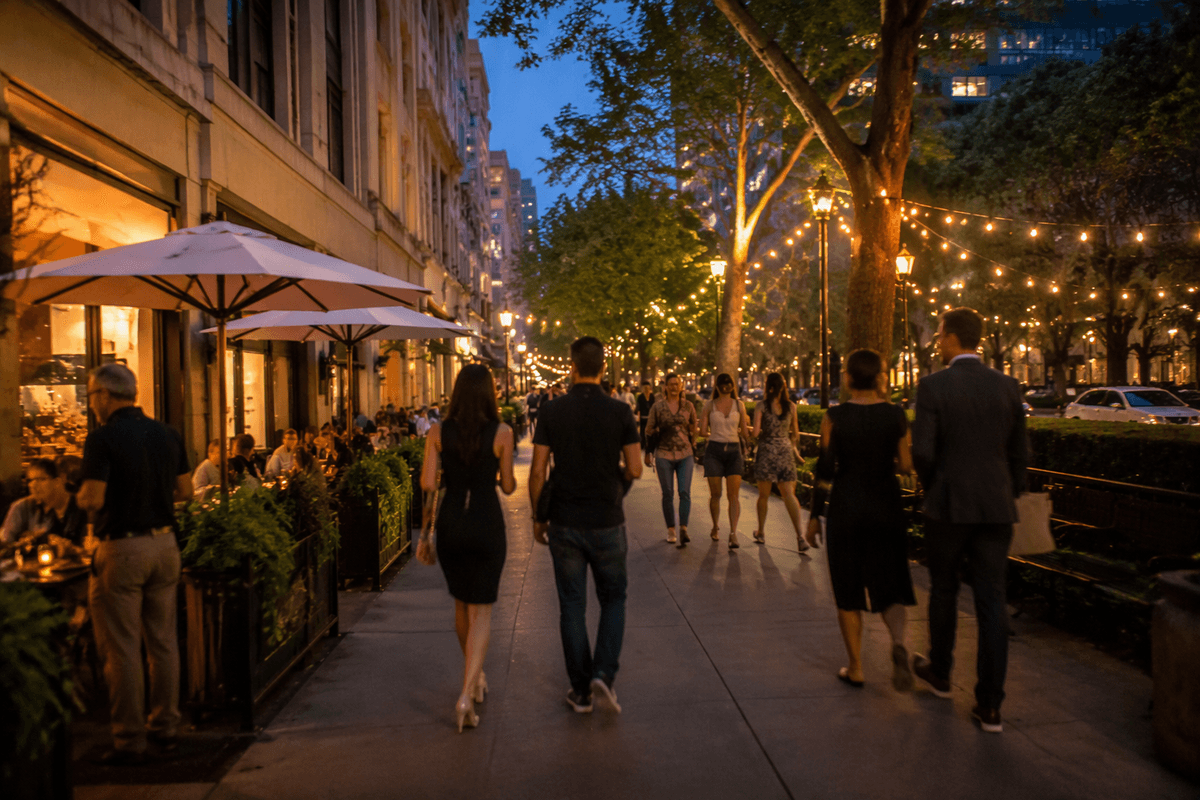
Around 6:30 p.m., I had to make a call that sounds small but isn’t: stay near the Parkway and eat “convenient,” or spend 15–25 minutes repositioning so dinner feels like a neighborhood instead of a pit stop. If you’ve ended the afternoon near the Art Museum/river, Fairmount works because it’s close and low-effort—but your choice set skews cozy rather than flashy. If you’re craving a more classic first-timer dinner scene, aim for Rittenhouse (walkable from Center City, but it’s a longer haul from the river when your feet are done).
Either way, treat dinner as your reset, not another attraction: a sit-down meal buys you bathrooms, a pace change, and enough energy to actually enjoy the skyline after. If you’re running late or wait times are ugly, this is where I’d rather simplify the menu than lose an hour standing around—Philly rewards decisiveness more than “the perfect place.”
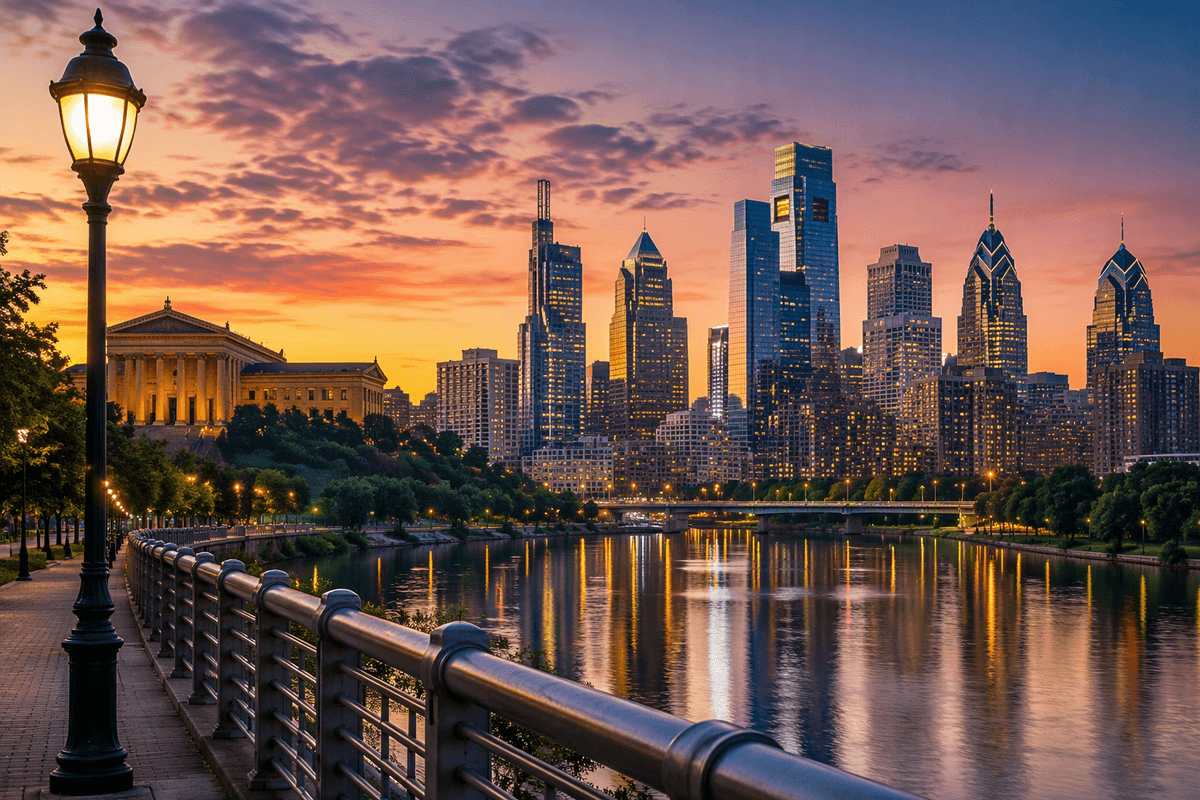
For the skyline finish, I like pushing to a river view after you’ve eaten, not before—night air helps, and you won’t be hangry while you’re trying to appreciate it. Just know the riverfront can feel longer than it looks on a map; if your legs are shot, take a quick rideshare/transit hop and save the walking for the final stretch.
Wrap-up: what you’ll remember most
The thing you’ll remember most isn’t a single landmark—it’s how Philly changes texture block by block, and how much smoother the day feels when you stop chasing “everything.” The moments that land tend to be simple: an early Old City street before the lines, a decisive meal that actually resets you, a night view you didn’t have to suffer for.
If you’re torn afterward about what you “missed,” that’s normal—and it’s the point of the plan. Pick your bias next time: one more museum with less roaming, or one more neighborhood with less indoor time. The only real mistake is pretending your feet won’t vote; they will, usually right when you’re tempted to add one last detour.