What the Visa Waiver Program really covers
The moment most people hesitate is right before booking flights: “If I have an ESTA, am I basically ‘approved’ for the U.S.?” The Visa Waiver Program (VWP) is really a shortcut to ask for entry without a visa, not a promise you’ll be let in. It’s designed for short trips—tourism, certain business activities (meetings, conferences), or simple transit—but it doesn’t cover anything that looks like working, studying for credit, or moving your life over in stages.
In practice, VWP works in two gates. Gate one is the airline: if your ESTA is missing, expired, or flagged, you can be denied boarding before you even reach the U.S. Gate two is U.S. border control (CBP): they still decide entry on the day, and they can say no if your story, documents, or past history don’t line up. That uncertainty is the friction point that makes refundable flights and flexible hotels worth considering.
The stay limit is up to 90 days total, and it’s strict—no extensions, and you generally can’t “reset” it with a quick trip to Canada or Mexico. For a 7–14 day trip, it’s usually perfect, but only if your plan is genuinely short and clean.
Who qualifies, and who doesn’t
I’ve seen the “simple” VWP question turn complicated fast when someone swaps passports mid-planning: the new number means a new ESTA, and if you leave it until the week of travel, you’ve created an avoidable choke point with the airline check-in desk. At the most basic level, you qualify if you hold a Visa Waiver Program-eligible passport (UK/EU countries that are in the VWP), you’re coming for 90 days or less for tourism, limited business, or transit, and you can present as a genuine short-stay visitor (return/onward plan, accommodation, enough funds). That’s the version that works smoothly—especially for a 7–14 day trip—because your story matches the program’s intent.
Where people fall out of “easy ESTA territory” is usually history, not itinerary. Prior U.S. overstays, visa refusals, certain arrests/convictions, removals/deportations, or past immigration trouble can make ESTA approval less likely or make entry more scrutinized even if it’s approved. Dual nationality can matter too: if you’re also a national of certain countries, or you’ve travelled to certain countries in specific timeframes, you may be pushed toward a full visa instead of VWP.
If any of those apply, the practical move isn’t to gamble at the airport—it’s to treat it as a visa decision early, because interview slots and processing times can turn “we’ll book this weekend” into “we can’t travel next month.”
ESTA basics: cost, timing, and validity

I’ve had that slightly sweaty moment at online check-in where you realise you’ve been treating ESTA like a quick formality, when it’s actually a small gate that can still slow you down. Cost-wise, the official fee is currently $40 USD per application (paid online), and what trips people up is paying a “helpful” third-party site an extra service fee without noticing. If you’re booking for two people, that price difference is noticeable on a mid-range budget—so it’s worth making sure you’re on the official CBP ESTA site before you start.
Timing is where the real risk hides. CBP’s guidance is to apply when you make travel plans, and not less than 72 hours before departure—because some applications don’t resolve instantly, and “pending” is a miserable status to sit with the night before a flight.
Validity is the nice part: an approved ESTA is generally valid for two years or until your passport expires (whichever comes first), and it covers multiple trips in that window. The limitation is that changes you’d consider “admin” (new passport, name change, certain answers changing) are exactly the kind of thing that can force a fresh application—so if you’ve renewed your passport for this trip, don’t assume an old ESTA carries over.
Rules once you arrive: stay limits and activities
The first time I landed on an ESTA, the thing that mattered wasn’t what I’d typed into the application—it was the small “admitted until” date tied to my I-94 record. That’s the date CBP is holding you to, and it’s easy to misread your own trip if you’re hopping cities and letting the return flight do all the “proof.” For a 7–14 day visit, I’d still build a buffer: delays, missed connections, or a last-minute change of return flight are manageable annoyances on a normal trip, but under VWP they can become an overstay you can’t “fix” later with an extension.
The rule that catches people out is how strict the 90 days is. VWP doesn’t allow extensions, and you generally can’t reset the clock with a quick detour to Canada or Mexico; if you’re trying to stretch a trip, that’s where a clean plan starts to look like you’re living in the U.S. in chunks. It’s also why “we might just stay longer if we like it” is a risky mindset to carry into a border interview.
Activity-wise, think “visitor, not participant.” Tourism is straightforward; business is usually fine when it’s meetings, conferences, client visits, or negotiating—things where you’re not being paid by a U.S. source and not filling a role. The friction point is anything that resembles work (even short-term gigs), studying for credit, internships, or volunteering that replaces paid labour; those are the scenarios where ESTA stops being a convenience and becomes a gamble at arrival.
Common pitfalls: denials, past travel, and overstays
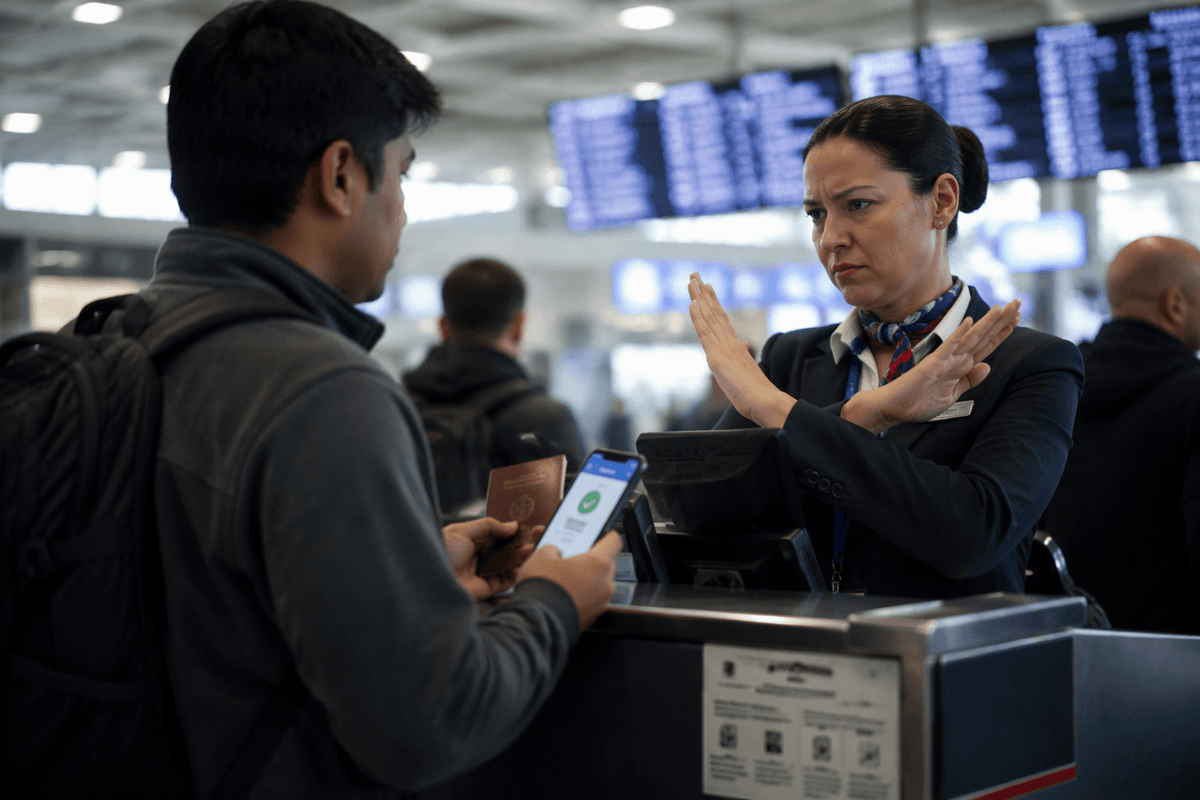
The most expensive “ESTA mistake” is assuming an approval (or a previous smooth entry) means you’re low-risk forever. Denials can be blunt and not very explanatory, and there’s no real appeal process in the moment—you’re simply back to “you need a visa.” If your application comes back denied or stuck in “pending,” the practical constraint is time: airlines won’t let you board on optimism, and U.S. consular interview slots can turn a quick weekend break into a reschedule.
Past travel and background questions are where people accidentally answer too casually. Even if you’re only planning 7–14 days, a “yes” to arrests/charges (including old, cautioned, or “spent” situations), prior immigration issues, or certain country travel/dual nationality can push you out of easy VWP territory. The frustrating part is that ESTA doesn’t grade on a curve—trying to “interpret” a question in your favour can be worse than admitting complexity and switching to a visa path early.
Overstays are the unforgiving one. A one-day overstay caused by a missed connection can feel minor, but it can trigger outsized consequences later (extra scrutiny, ESTA problems, or being steered to a visa). If your timeline is tight, this is where refundable flights and accommodation are less about comfort and more about keeping options when the border-control reality doesn’t match the plan you wrote down.
When a visa is the smarter option
The point I usually stop “refreshing the ESTA status page” and switch mental gears is when the trip stops looking like a clean, low-drama visitor entry. If you’ve had an ESTA denial before, a prior U.S. visa refusal, any overstay (even one you’ve mentally filed as “administrative”), or an arrest/charge that makes you hesitate over how to answer, a B-1/B-2 visitor visa often becomes the calmer option. It’s slower and more paperwork, but it replaces the airport gamble with a process where you can explain context up front.
A visa is also smarter when your story at the border would naturally attract extra questions: lots of recent U.S. trips close together, long stays that start to look like you’re “living” in the U.S. in chunks, or a trip where you can’t show a clear return plan because you’re booking one-way flights “to stay flexible.” That flexibility is exactly what can work against you at check-in or with CBP, especially on a mid-range budget where last-minute rebooking hurts.
And if your trip includes anything that resembles work, credit-bearing study, internships, or structured volunteering, ESTA convenience can turn into a hard stop on arrival. The constraint with the visa route is timing—interview appointments and processing don’t care that your flight deal expires tonight—so if any of this sounds like you, treat the visa as the main plan and book flights you can change without a fight.
Choosing confidently: simplest path for your trip
The decision usually comes down to one uncomfortable question: “If I get pulled into extra questions at check-in or at the border, will my answers stay simple?” If your trip is a clean 7–14 days, you have a straightforward return plan, and nothing in your history makes you pause over the ESTA questions, VWP + ESTA is the path that tends to run smoothly—fast, cheaper, and less admin.
If you’re hesitating because of a prior overstay, a denial/refusal, an arrest/charge you’re unsure how to describe, or travel/dual-nationality factors that might trigger extra scrutiny, don’t treat that as “probably fine.” The cost of being wrong isn’t just stress; it’s missed flights and a trip that collapses at the airport.
My practical cue: if you can’t explain your situation in two calm sentences to an airline agent or CBP officer, plan for the visa route and book like you might need time—because certainty is what protects your budget, not optimism.






![10 Best Money Apps for Teens Under 18 [Invest, Pay + More]](static/image/2026/09/01/3f428ab8-8307-404d-a595-f709507802d9.png)