The dashboard light hits on a busy Monday
It’s Monday, the car is already loaded with the week, and then a light snaps on like a tiny deadline you didn’t schedule. Maybe the engine feels normal. Maybe it doesn’t. Either way, the timing is the problem: there’s work, school pickup, groceries, and no space to lose a day to a shop waiting room. What makes it worse is not knowing whether you’re looking at “pull over now” or “deal with it this weekend,” and the wrong call can get expensive fast.
Most people either ignore it until something breaks, or they hand the keys over at the first place that can fit them in and hope for the best. Both reactions tend to cost more than the repair itself—either in towing and collateral damage, or in rushed approvals on parts and labor you didn’t really choose. The next ten minutes are where you buy back control, even if you still have to drive today.
Stop the panic: triage urgency in ten minutes
Before calling anyone, you’re trying to answer one question: can the car safely finish today without turning a small repair into a larger bill. Start with the basics you can check in two minutes—temperature gauge staying normal, no flashing red warning, no sharp fuel smell, no loud new knocking, no brake pedal going soft. If the light is flashing (especially a check-engine light), or the engine is misfiring and shaking, treat it like “limit driving” and plan for a same-day scan or tow. The cost of being wrong here is catalytic-converter money, not inconvenience.
If nothing feels or sounds different, shift into “controlled driving” mode. Pull up the owner’s manual light index if you can, then take a quick video of the dash and note when it happened (after fueling, after a cold start, after hitting a pothole). That timestamp helps later when a shop guesses. Make one decision: keep trips short and avoid highway loads until you’ve gotten codes read. Ten calm minutes now beats an emotional approval later.
Get a clean estimate without buying a mystery fix
Now you’re trying to turn that dash video and the symptoms into something a shop can price without guessing. The quickest way is to ask for a diagnostic and a written estimate, not a “we can probably fix it” promise. Expect a diagnostic fee, and treat it like buying clarity: you’re paying for codes, test results, and a real plan. When you book, say you’re authorizing up to $X for diagnostics only, and you want a call before any repair starts. That one sentence prevents the surprise “we already replaced a few things” bill.
When the shop calls back, slow the conversation down. Ask for the exact code(s), what test confirmed the failed part, and what they plan to replace—by name, not “tune-up” or “service.” A clean estimate has parts, labor hours, shop supplies, taxes, and whether the part is new, remanufactured, or used. If they can’t describe the failure beyond “it needed it,” you’re not looking at an estimate yet—you’re looking at a guess with a price tag.
Use a second quote strategically, not exhaustively
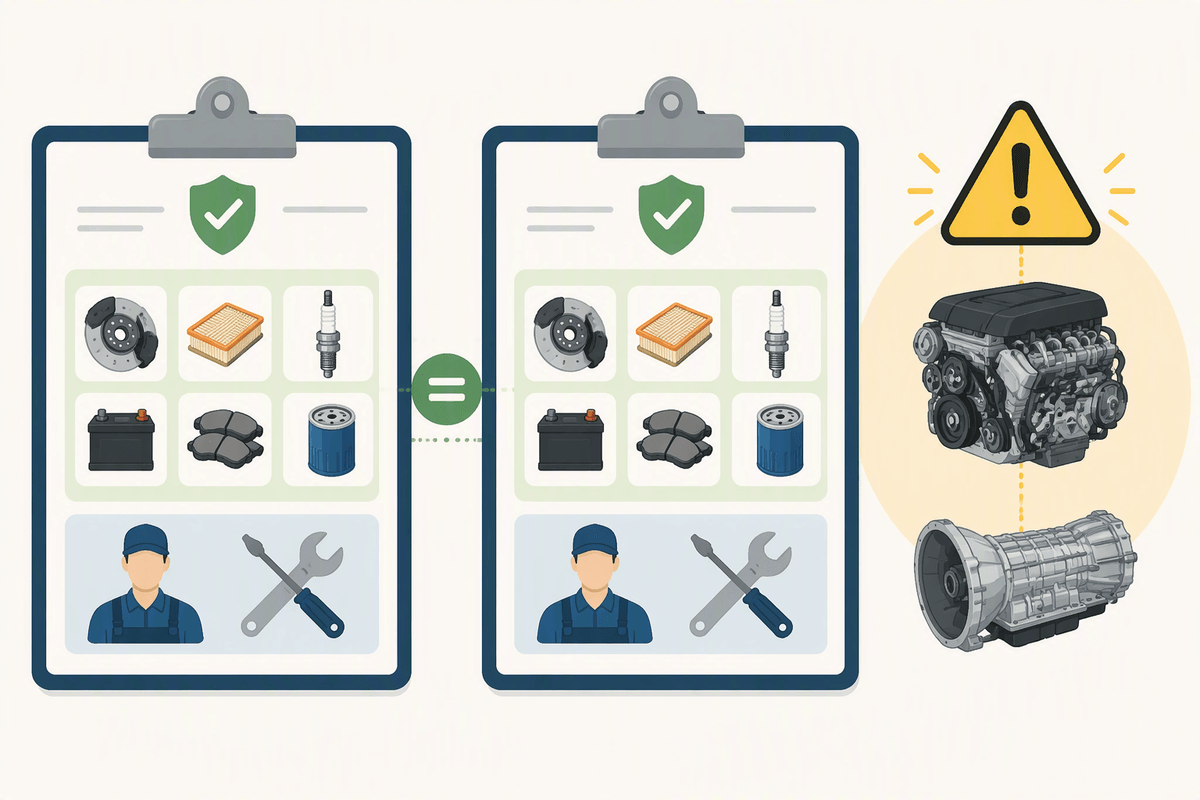
With one written estimate in hand, the temptation is to call three more shops and “see what’s fair.” That usually turns into a week of voicemail, repeat diagnostic fees, and a car that’s still limping through school pickup. A second quote works best when the downside is big: anything over a few hundred dollars, anything involving internal engine/transmission work, anything that starts with “we’ll try this first,” or any repair where the shop can’t clearly tie a test result to a failed part. If it’s a straightforward wear item with clear symptoms—brakes grinding, a leaking radiator—you may be better off spending that time scheduling the work.
Keep the second quote clean by keeping the scope identical. Give the next shop the code(s), the symptom notes, and the first estimate, then ask them to price the same repair and explain what would change that price. If they immediately add a long list of “while we’re in there” items, ask which ones are safety-critical today versus maintenance you can plan next month. Two estimates that match on diagnosis—and differ mostly on labor rate or parts—usually tells you enough to choose without turning it into a second job.
Choose parts like you’ll own the car tomorrow
Once the diagnosis is solid, the real money leak often shows up in the parts line. The cheapest option can be fine—until it isn’t, and you’re paying labor twice. So ask one practical question: “If this part fails in six months, who eats the labor?” Most warranties cover the part, not the time to swap it again, and that’s the bill that hurts when you still need the car every morning.
When there are choices, treat them like tiers. OEM (dealer) parts usually cost more but can reduce risk on sensors, ignition parts, and anything that talks to the computer. Aftermarket can save real money on simple hardware (belts, hoses, some suspension pieces), but ask for the brand name and warranty in writing. Remanufactured can be smart for alternators and starters—just confirm the warranty length and whether there’s a core charge. Used parts can work for body pieces, but for safety items (brakes, airbags, steering), don’t bargain-hunt unless the shop can stand behind it.
Cut repeat repairs by timing maintenance around reality
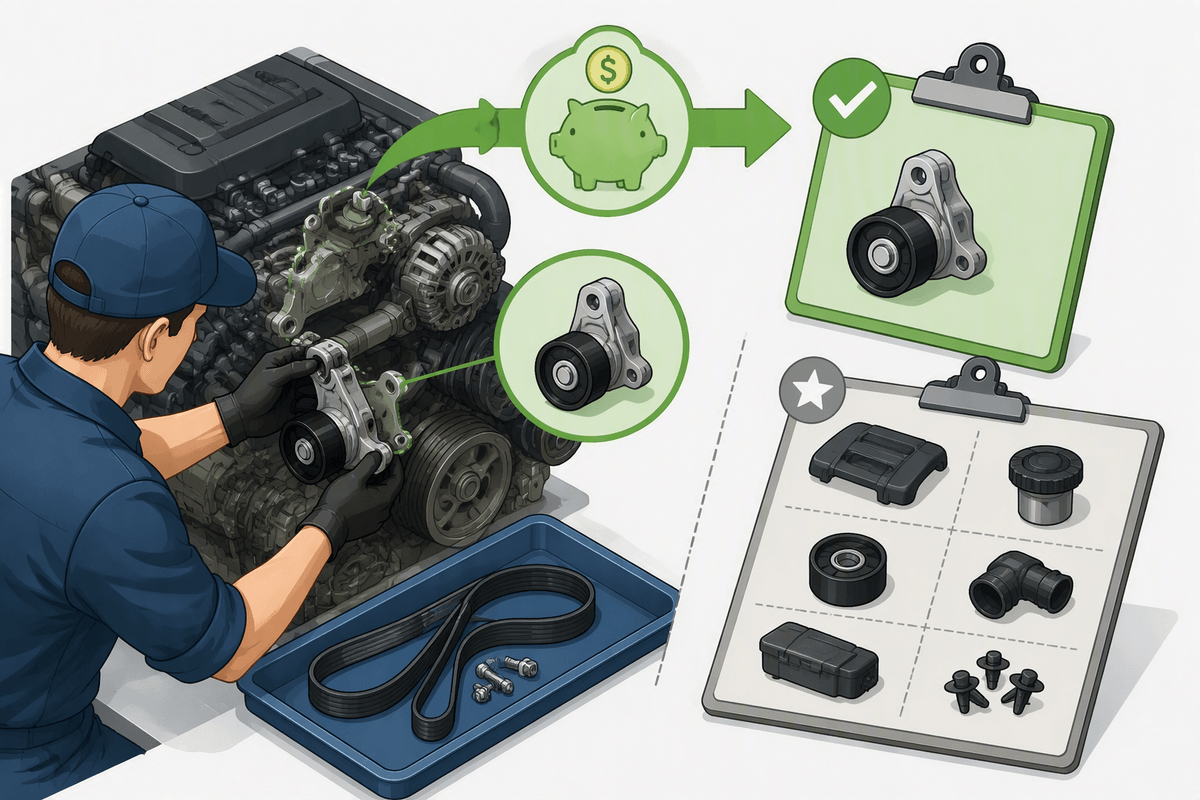
The next savings usually isn’t a cheaper shop—it’s fewer “we’re back again” visits. What drives repeat repairs is stacking work on the same failing system at the wrong time: replacing a battery when the alternator is weak, doing pads when the calipers are sticking, swapping a sensor when the wiring is brittle. If the estimate points to a chain reaction, ask what else in that circuit or assembly is likely to be near end-of-life, and what would cost the most labor to reopen later. That’s how one $320 job quietly turns into two $320 jobs.
Then line it up with how the car is actually used this month. If you can’t be without it midweek, schedule the “open it up” repairs (timing cover leaks, suspension, cooling system work) right before a day you can borrow a car—because delays cause shortcuts, and shortcuts cause comebacks. If the shop already has access during today’s repair, greenlight only the add-ons that prevent paying labor twice (like a belt tensioner when the belt is off anyway), and push cosmetic or “nice-to-have” services to a dated list. The list is the point: it turns surprise maintenance into planned spending.
Before you pay, lock in proof and protection
By the time the repair is “ready,” the pressure shifts to getting the car back before tomorrow morning. That’s when small details get skipped. Before you approve the final total, ask for the old parts back (or at least photos if they had to be returned for a core), and have them show you the test results that justified the fix—scan printout, charging-system numbers, brake measurements, whatever fits the job. You’re not trying to catch anyone; you’re building a paper trail in case the symptom returns.
Then lock in the protection that actually matters: warranty terms in writing, and whether labor is covered if the part fails. Confirm the final invoice matches the estimate, or get a clear note explaining changes. Pay by credit card if possible for dispute leverage. And before you leave the lot, do a two-minute check—warning lights off, no new noises, and a quick look for leaks. Catching “not quite right” while they still have the bay open is how you avoid paying twice.