What the interview really tests (and why it surprises)
The first surprise hits at the window: you can bring a folder thick enough to look “prepared,” and the officer may barely touch it. That isn’t disrespect—it’s a clue. The interview is less a paperwork audit and more a quick credibility check under time pressure, where your story has to match what you already submitted and what your circumstances reasonably support.
What they’re really testing is simple but uncomfortable: whether your U.S. trip makes sense for your life right now. Purpose, timeline, and funding need to align (a two-week tourism trip is easier to believe than an open-ended “I’ll see what happens”). Your “ties” aren’t about patriotism; they’re about concrete reasons you’ll return—work you can’t abandon, studies with a schedule, dependents, property or long-term obligations. The constraint is that you have seconds, not minutes, to communicate this without oversharing.
And the part that catches first-timers: consistency beats performance. A polished speech can sound rehearsed, while a short, specific answer that matches your DS-160 reads as natural. If there’s a weak spot—limited travel history, irregular income, a relative paying—own it plainly and explain the logic, because vague answers are what turn routine questions into follow-ups.
Pre-interview prep: documents, story, and consistency
The week before my own appointment, the hardest part wasn’t collecting papers—it was deciding what not to carry. A giant binder can slow you down at security and make you fumble at the window, but walking in empty-handed raises stress if you get a document request. What worked best was a thin, “grab-in-5-seconds” set: passport (and old passports if you have them), DS-160 confirmation, appointment confirmation, one photo if your post still asks for it, and a tight stack of supporting proof you can show only if asked.
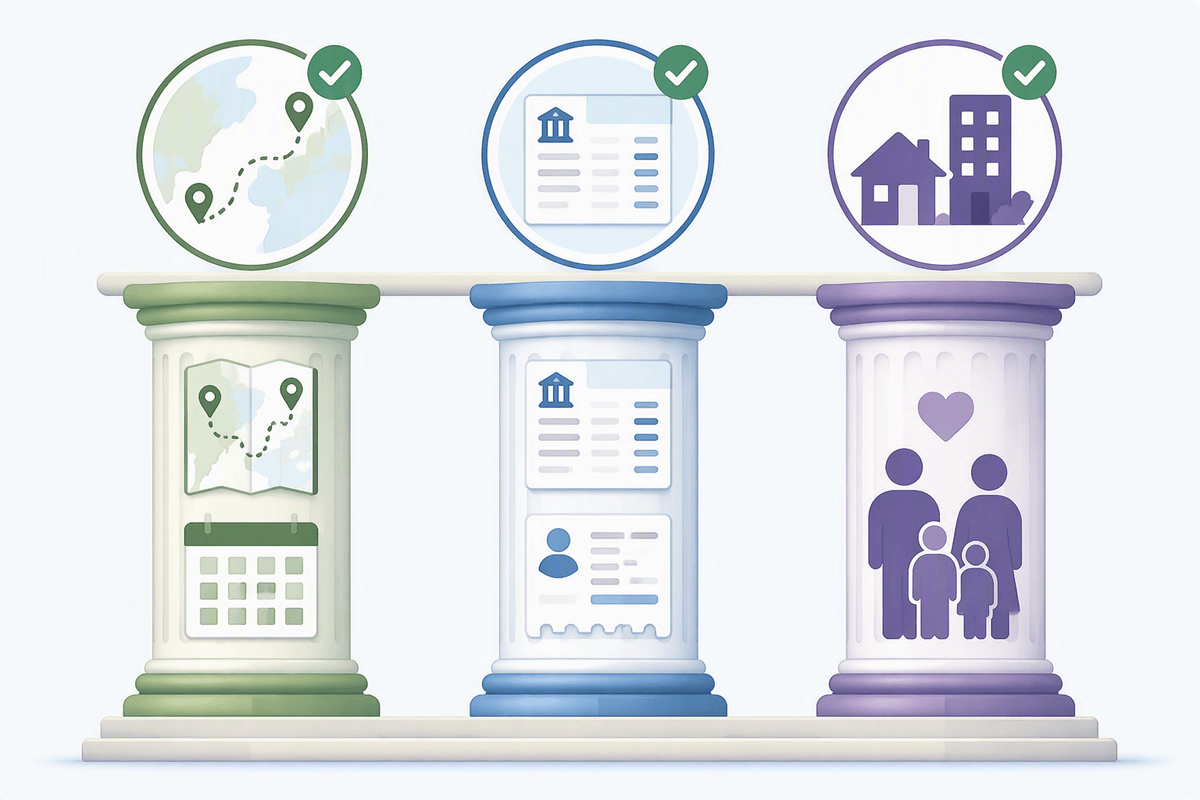
For supports, prioritize items that connect directly to the three things they probe fast: purpose, funding, and return ties. A simple trip outline (cities, dates, who you’ll visit) helps if you get nervous, but it must match your DS-160 and not drift into a long itinerary. For funding, bring recent bank evidence and something that explains income (pay slips, business registration/tax summary)—not because they always ask, but because “I can afford it” lands poorly if your application shows thin finances. If someone else pays, bring the sponsor’s proof and be ready for extra scrutiny; it’s common, but it invites follow-up.
Then do a consistency sweep: reread your DS-160 like an officer would, looking for mismatches (job title vs duties, dates, prior refusals, relatives in the U.S., previous travel). The constraint is you can’t “clarify” a contradiction in a 30-second answer—you can only avoid creating one. Practice answers that are short and specific, but don’t memorize a script; you’re aiming for the same facts every time, not the same sentences.
How consular officers decide: ties, intent, and credibility
I remember watching the line move and realizing the officer wasn’t “reviewing my file” so much as stress-testing a few assumptions in real time. They already have your DS-160 and whatever their system shows; the interview is where they decide if your trip fits your profile without gaps that need investigation. The tricky constraint is that the default posture is caution: if your answers don’t quickly support a temporary visit, the safest decision for them is to say no.
In practice, three buckets drive most outcomes: ties, intent, and credibility. “Ties” is less about owning something and more about whether your life has a schedule you’re expected to return to—an employer that needs you back on Monday, a degree program with a term calendar, dependents you actively support. If your tie is softer (freelance work, family business, informal caregiving), it can still work, but you may need one clean sentence that makes it concrete (“I manage X store; my staff schedule is already set for my return on date”).
“Intent” is where vague plans get expensive. A short, dated trip with a clear reason reads better than “tourism and maybe visit my aunt,” especially if you have U.S. relatives. And “credibility” is the multiplier: small DS-160 mismatches (job dates, prior travel, who’s paying) can matter more than the mismatch itself, because they make every other answer feel less reliable. If something is imperfect—limited travel history, a sponsor, a new job—state it plainly and keep it aligned with the form; adding extra details to sound convincing is usually what creates the follow-up.
Answering questions: concise, honest, and on-point
At the window, the temptation is to “tell your full story” so nothing is misunderstood—but long answers are where small contradictions get created. What worked best in practice was treating each question like a receipt: give the direct fact first (purpose, dates, who, who pays), then stop. If the officer wants more, they’ll pull it out of you. This feels risky when you’re anxious, but it’s actually safer than volunteering extra details that don’t match your DS-160 wording or timelines.
For the common openers (“Why are you going?” “How long?” “Where will you stay?”), keep it tight and specific: “Tourism in New York for 10 days in November; I’ll stay at X hotel” or “Visiting my sister in Dallas for 12 days; staying with her.” The friction point is family in the U.S.—not because it’s disqualifying, but because it can blur intent. If you’re visiting relatives, say so immediately, then anchor it to a short, dated plan and a return obligation that’s easy to understand (“I return to work on Monday, date”). Avoid adding “and maybe” clauses; those invite follow-ups.
Funding questions are where people accidentally sound rehearsed or evasive. If you’re self-funded, a clean sentence is enough (“I’m paying from my savings and salary as a ___”). If someone sponsors you, don’t hide it—state the relationship and why it makes sense (“My aunt is paying because she invited me; I cover my own daily expenses”). That’s a trade: sponsorship can be normal, but it often triggers more probing about your own situation, so don’t overpromise finances you can’t show if asked.
When a question hits a weak spot (limited travel history, a new job, a prior refusal), the goal isn’t to “fix” it in the moment—it’s to answer it without drama or extra explanations. Admit the fact, give one stabilizing detail, and stop: “Yes, I was refused in 2022; I applied again now because my job is stable and I’m taking a short, scheduled trip.” If you don’t know an exact detail (a cousin’s full address, a precise ticket price), say what you do know and avoid guessing; confident guesses are the fastest way to create a mismatch.
Day-of tactics: timing, demeanor, and red flags

I nearly missed my own “calm window” by trying to arrive too early—some posts won’t even let you line up far ahead of your slot, and standing outside longer just burns energy. What worked better was aiming for a sensible buffer (enough for security and a bathroom stop), then switching into a simple routine: documents in the same order every time, phone off, DS-160 confirmation easy to grab. If you’re juggling a big folder, that’s where people start dropping papers and looking flustered before the first question is asked.
At the window, your demeanor matters less as “confidence” and more as control. Speak like you’re answering a cashier, not defending a thesis: one sentence, stop, wait. If you need a second to translate the question in your head, pausing briefly is safer than filling the silence with extra details. A common friction point is trying to be “friendly” by volunteering context (“I’ve always dreamed of America…”)—it can accidentally shift attention onto intent instead of logistics.
Red flags on the day are usually self-inflicted: arguing with the premise of a question, correcting your DS-160 verbally (“Actually my job title is different now”), or sounding unsure about who pays and where you’ll stay. If something has changed since you submitted the form, acknowledge it cleanly (“I changed roles last month; same employer”) and be ready to show one document if asked—then stop. The goal isn’t to look perfect; it’s to look consistent under time pressure.
Afterward: outcomes, next steps, and peace of mind
After the interview, the most disorienting part is how fast it’s over—and how little feedback you get. If you’re approved, the officer may keep your passport and tell you it will be returned later; that’s normal, but it also means you’re temporarily without your primary ID, which can be inconvenient if you have domestic travel or banking tasks planned in the next few days. Don’t buy nonrefundable flights in the hallway out of adrenaline; even approved cases can take longer than you expect if the post is backed up.
If you’re refused, it often comes as a short code and a polite sentence, not a detailed explanation you can “argue” with. Treat that as data: your weak point was likely ties, funding clarity, or a DS-160 inconsistency that made the trip feel unsupported. The constraint is you usually can’t fix that by reapplying immediately with the same facts; your next application needs a real change (stronger employment history, clearer self-funding, cleaner documentation) and a story that’s simpler, not longer.
Either way, write down what you were asked while it’s fresh. It’s the quickest way to regain control: you’re no longer guessing what mattered—you’ve seen it.